
A Canadian small business usually can’t negotiate true enterprise shipping rates on its own. The volume bar is too high, the timeline is too long, and no realistic growth rate closes the gap fast enough. Enterprise-level rates are still reachable, but through a different structure: pooled network volume, direct carrier accounts kept in the merchant’s own name, and multi-carrier routing that sends each parcel to the carrier that owns its lane.
At Part n Parcel, we run this model for 240+ Canadian e-commerce businesses, and the piece most operators overlook is the account itself. A rate is worthless if you can’t see it, audit it, or check what you’re paying against what you were quoted. The moment you ship on an account you don’t control, you’ve handed over your pricing power.
That matters more than the rate itself, so it’s where we’ll start.
Why the account matters more than the rate
Shipping rates in Canada aren’t published. Every merchant negotiates on their own, and the carrier always knows more than the person across the table. That imbalance is built into the system and won’t change. The one real defense a merchant has is visibility: seeing the actual carrier rate, checking an invoice against the contract, and catching errors before they pile up.
You only get that visibility when the carrier account is in your name.
| Direct account in your name | Someone else’s account |
| You see the actual carrier rate | The rate includes a margin you can’t measure |
| You can audit invoices against your contract | You have limited visibility into real costs |
| Pricing changes require your agreement | Pricing can shift without notice |
| You ship under your own business | Your shipments ride on a master account |
| You reach carrier support directly | Support goes through an intermediary |
Ship on an account you don’t control and the rate might be competitive or it might be padded. You have no way to know. Every label you send through an account you can’t audit is money you can’t verify.
So the target isn’t a lower number on its own. It’s a rate you can see, on an account you control, that’s competitive on the exact lane each parcel travels. Reaching that as a small business takes structure, because the rates come from volume you don’t have on your own.
Can a Canadian small business actually get enterprise rates?
Yes, but not by negotiating alone, and not by growing into them.
Meaningful negotiating leverage with a single carrier starts at roughly $2million in annual spend with that one carrier. Below that line, carriers route you to self-serve or aggregator channels: no named account rep, no custom rate card, no real negotiating power.
This is where the math traps most operators. A merchant doing $3 million in total annual shipping feels large, but split across three carriers, that’s about $1 million with each. From every carrier’s point of view, you’re a self-serve account three times over. Volume only earns leverage when it’s concentrated with one carrier, and concentration brings its own problem.
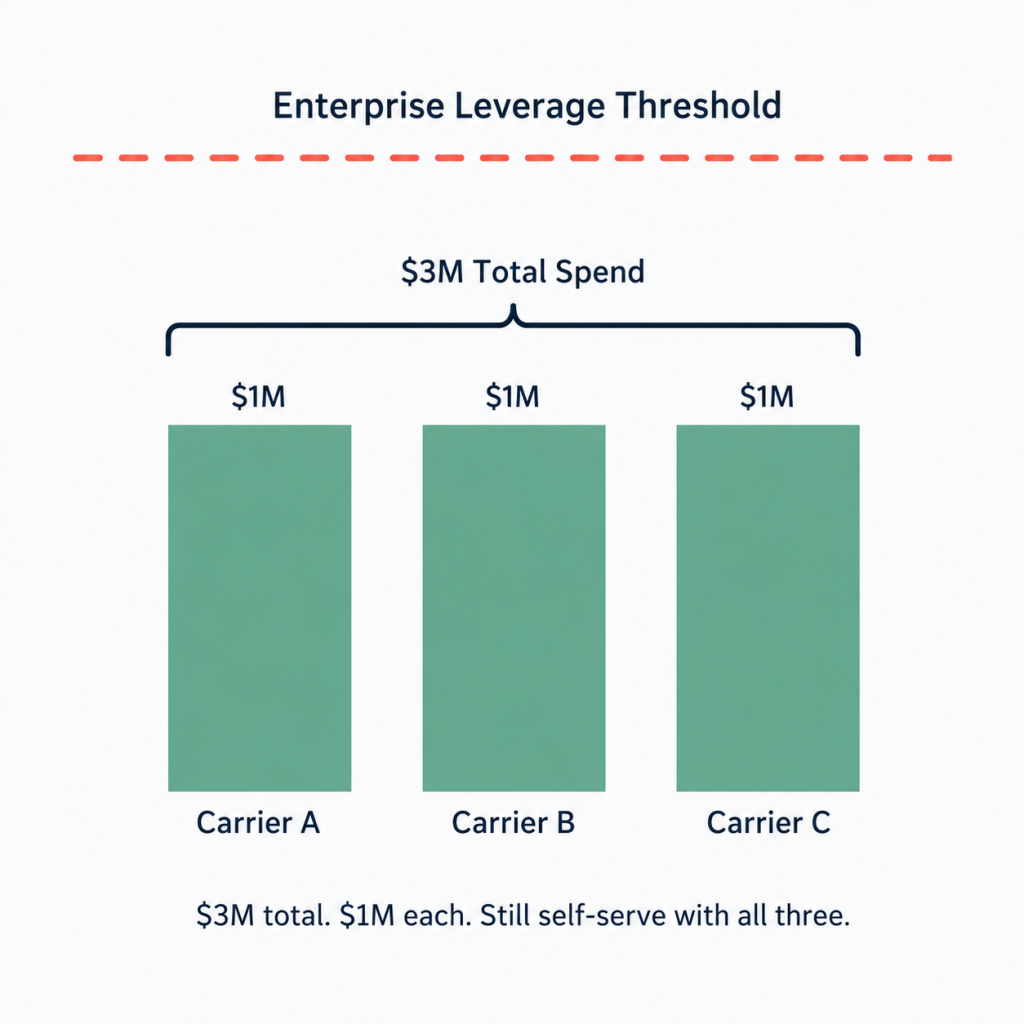
You can’t reach enterprise rates by shipping more, because the per-carrier volume bar sits at a scale almost no independent small or mid-size merchant hits. The rate has to come from somewhere other than your own volume.
Why “just ship more” doesn’t close the gap
The standard advice is to put everything with one carrier, hit a higher volume tier, and unlock a deeper discount. It does produce a better headline rate. It also creates two problems that quietly cost more than the discount saves.
Your effective discount drifts with your volume, even when your contract doesn’t
Carrier discounts aren’t fixed the way most merchants assume. UPS structures its pricing around Portfolio Tier Incentives; typically calculated on a rolling 52-week average of your shipping spend. Your printed contract can stay identical while your effective discount moves, because the tier you qualify for is recalculated against trailing volume. (Share A Refund has a clear breakdown of how portfolio tier incentives are calculated if you want the mechanics.)
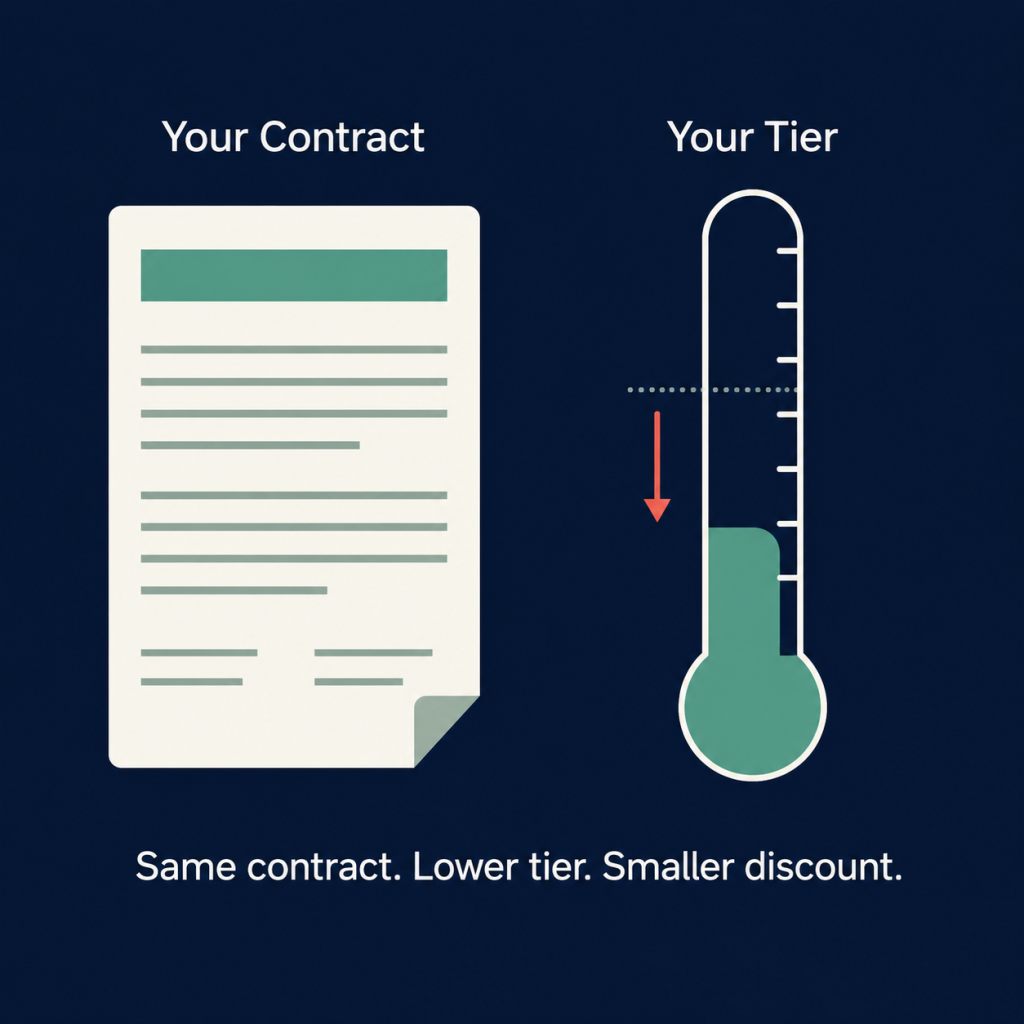
FedEx and Purolator work on a volume commitment strategy outlined in your agreement. Miss the commitment, you are considered non-compliant and the rates change. This is how committed-volume pricing is designed to work. Carriers reward shippers who commit volume, and the discount tracks the volume that actually shows up. For a small account, that position is fragile. A slow quarter can pull you down a tier. A commitment you miss can trigger reduced incentives or a minimum charge. The rate you negotiated holds only as long as your volume does.
No single carrier is strong on every Canadian lane
No carrier owns every Canadian route. One might be sharp on urban Ontario to Quebec but weak into Atlantic Canada. Another is strong on regional ground but expensive coast to coast. Concentrate all your volume with one carrier to earn its best tier and you also route every parcel through it, including the lanes it prices poorly. You overpay on part of your shipments to protect the discount on the rest.
The Volume Trap: concentrate and you’re locked in, diversify and you’re too small to matter
This is the bind every growing Canadian merchant eventually hits.
| Strategy | What you gain | What it costs you |
| Concentrate all volume with one carrier | The best committed rate that carrier offers | Locked into one network, overpaying on every lane that carrier is weak on |
| Diversify across several carriers | Coverage on the lanes each carrier is good at | Your volume with each carrier shrinks until none treats you as a priority |
Concentrate, and you’re locked into one network’s pricing weaknesses. Diversify to fix coverage, and you split your volume so thin that no single carrier treats you as a priority. The only shippers who escape this alone are at national-retailer scale, where total volume is large enough to command priority pricing from several carriers at once. Almost no independent e-commerce business is there.
The trap exists because the merchant is solving it with the only tool they have, their own volume. The way out is to stop depending on it.
Why one big discount is the wrong target
It’s tempting to reduce the whole problem to one number: get the discount as deep as possible and call it done. But a single headline discount still routes everything through one carrier’s network, including the lanes that carrier handles poorly.
A 30% discount with one carrier loses to another carrier’s standard rate on routes where the other carrier is stronger. The real target is the cheapest qualifying rate on each parcel, on the lane it’s actually traveling, with the carrier that owns that route. No single contract delivers that, because no single carrier is best on every lane.
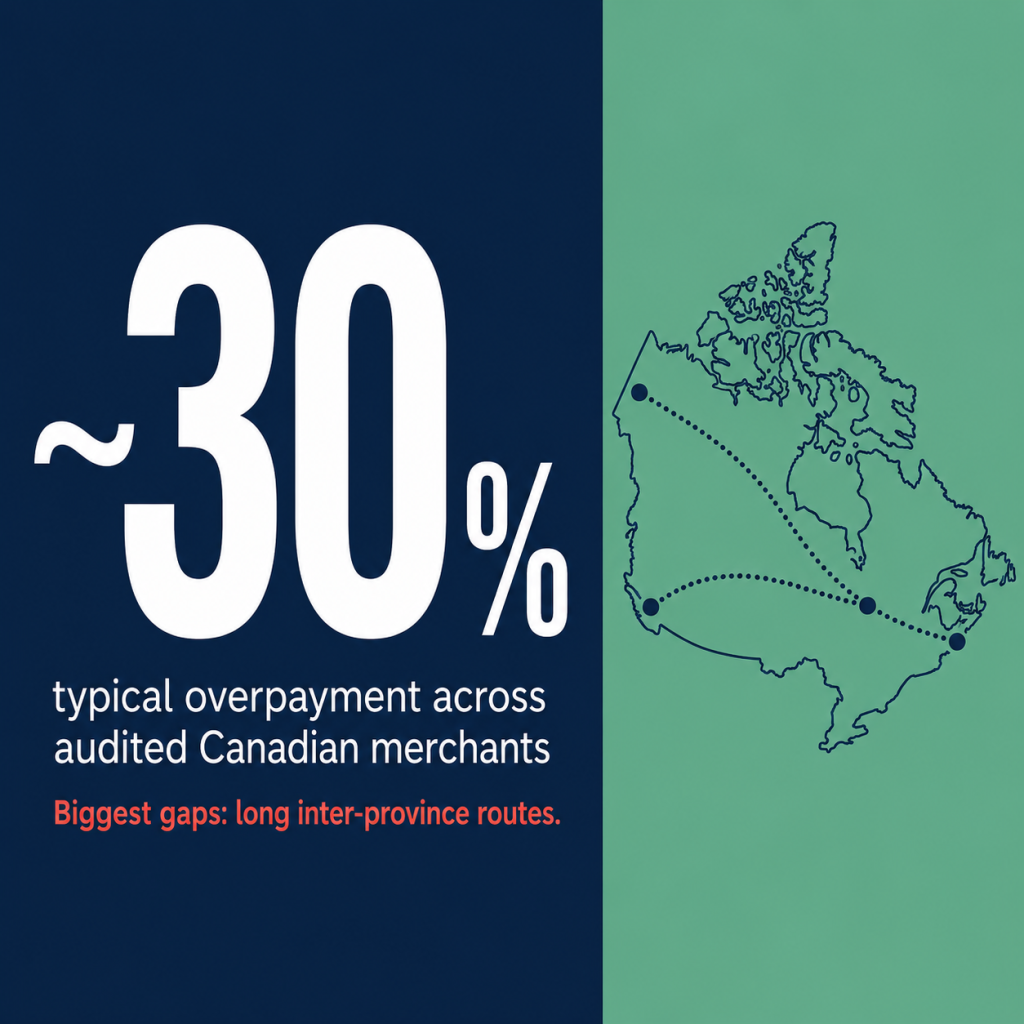
Across audited Canadian merchants, the typical business is overpaying by roughly 30%, and the biggest gaps cluster on long inter-province routes, where a single-carrier account has the least flexibility.
How a managed carrier network resolves the trap
Enterprise rates come from enterprise volume. A single small merchant doesn’t have it. A network of merchants does.
That’s the structure Part n Parcel built, and it runs on three pieces:
- Direct carrier accounts in your name. You ship under your own business, see your actual rates, and the carrier handles carrier issues with you directly. Nothing rides on a master account you can’t see into.
- Enterprise rates from the network’s combined volume. The rates come from Part n Parcel’s network agreement and the combined volume of 240+ Canadian e-commerce businesses, which clears the per-carrier bar no individual merchant reaches alone.
- A managed layer that routes each parcel correctly. Each shipment goes to the carrier that owns its lane. We watch the volume tiers and surcharges so nothing drifts, and price every parcel with a transparent markup you see before you commit.
One point we want to be clear about is that the accounts are in your name, but both the accounts and the enterprise rates are tied to Part n Parcel’s network agreement and the network’s combined volume. They don’t transfer if a business leaves, because the volume that earned them doesn’t transfer either. While you’re in the network, you get a direct account in your name, full rate visibility, and direct carrier support, which is exactly what a master-account setup can’t provide.
For the full diagnosis of why Canadian shipping runs so expensive (carrier opacity, rate creep, and the economics underneath), [LINK PENDING: Why Is Shipping So Expensive in Canada?] covers it in detail.
How this differs from a shipping aggregator
A shipping aggregator is a reasonable starting point while shipping isn’t yet a meaningful line on your P&L. The ceiling shows up the moment it becomes one.
On an aggregator, you ship on the platform’s account. The carrier never knows you exist, and the margin is built into a rate you can’t break apart. That’s the trade: simplicity in exchange for never seeing your real cost. An aggregator can’t show you the underlying rate without exposing its own margin, so it doesn’t. That’s how the model is built.
A managed carrier network works differently: a direct account in your name, enterprise rates from the network’s combined volume, and a transparent markup you see before you commit instead of an undisclosed margin baked into every label. You’re paying for the service either way. The difference is whether you can see what you’re paying.
Why you can’t just pool volume yourself
Pooling the volume isn’t the hard part. Carrier approval is. Carriers have approved only a small number of groups for enterprise pricing, and they aren’t actively approving more. Approval takes demonstrated traction, operational maturity, and the ability to deliver value the carrier can’t generate on its own. That gated access is part of what protects the rates for the businesses already inside.
How to audit your own shipping invoice
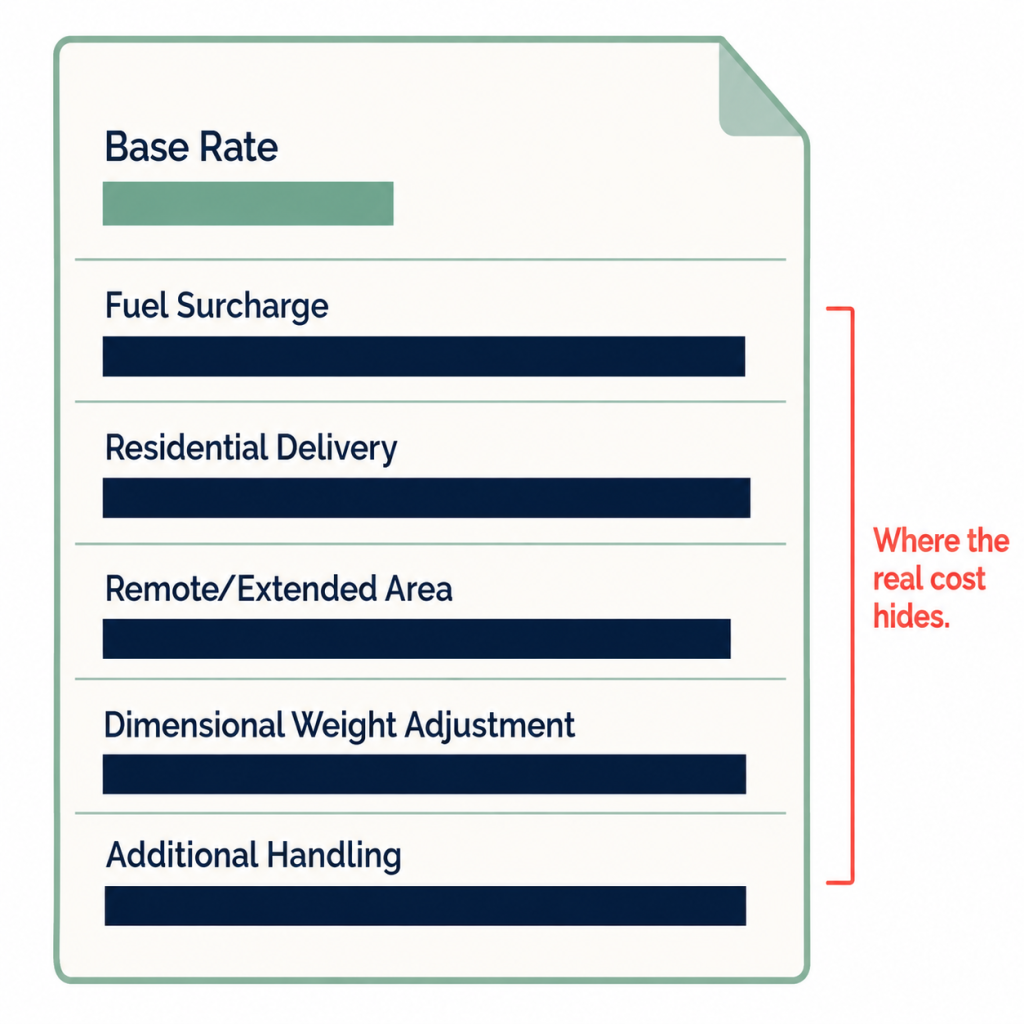
You don’t have to change anything to find out whether you’re overpaying. Most of the gap is sitting on an invoice you already have. Pull a recent one and check:
- Carrier versus lane. Is each parcel on a carrier that’s actually strong on that route, or just your default?
- Origin and destination province. The biggest gaps cluster on long inter-province routes, where a single account has the least flexibility.
- Residential versus commercial. Look for parcels reclassified as residential. That reclassification adds a surcharge.
- Fuel surcharge. It floats as a percentage and moves with carrier fuel tables, so it’s easy to miss when you’re scanning line items.
- Rural and extended-area fees. These hit destinations outside core delivery zones and add up fast across a customer base spread across the country.
- Dimensional weight. Lightweight parcels in oversized boxes get billed on volume instead of actual weight.
- Base charge versus total surcharges. Compare the two. If surcharges rival the base rate, that’s where the money is going.
- Speed paid for versus speed needed. Expedited service on parcels that didn’t need it is a common, quiet overspend. Coast-to-coast two-day delivery on a small parcel can run $20 to $30.
- The question a single account can’t answer. Could this parcel have moved cheaper on another carrier? On one account, you can’t even ask, and that limitation is the core of the problem.
Every item on that list depends on seeing your actual rate. On an account you don’t control, the audit isn’t possible.
What this looks like in practice
A Canadian coffee company we work with had built its entire volume with a single carrier. They had a decent committed rate, but it left them overpaying on every lane that carrier handled poorly, which is the concentration side of the Volume Trap in action. Moving to a multi-carrier strategy on direct accounts, with each parcel routed to the carrier that owned its lane, cut their total shipping cost by about 30%. The savings didn’t come from one deeper discount. They came from ending the overpayment on lanes a single account had locked them into.
Most businesses in the network land in a 15% to 40% range depending on carrier mix, volume, and package profile. The right combination can push results further, but that’s upside, not what to plan around. (More examples in our shipping optimization case studies.)
What Canadian shoppers expect at checkout
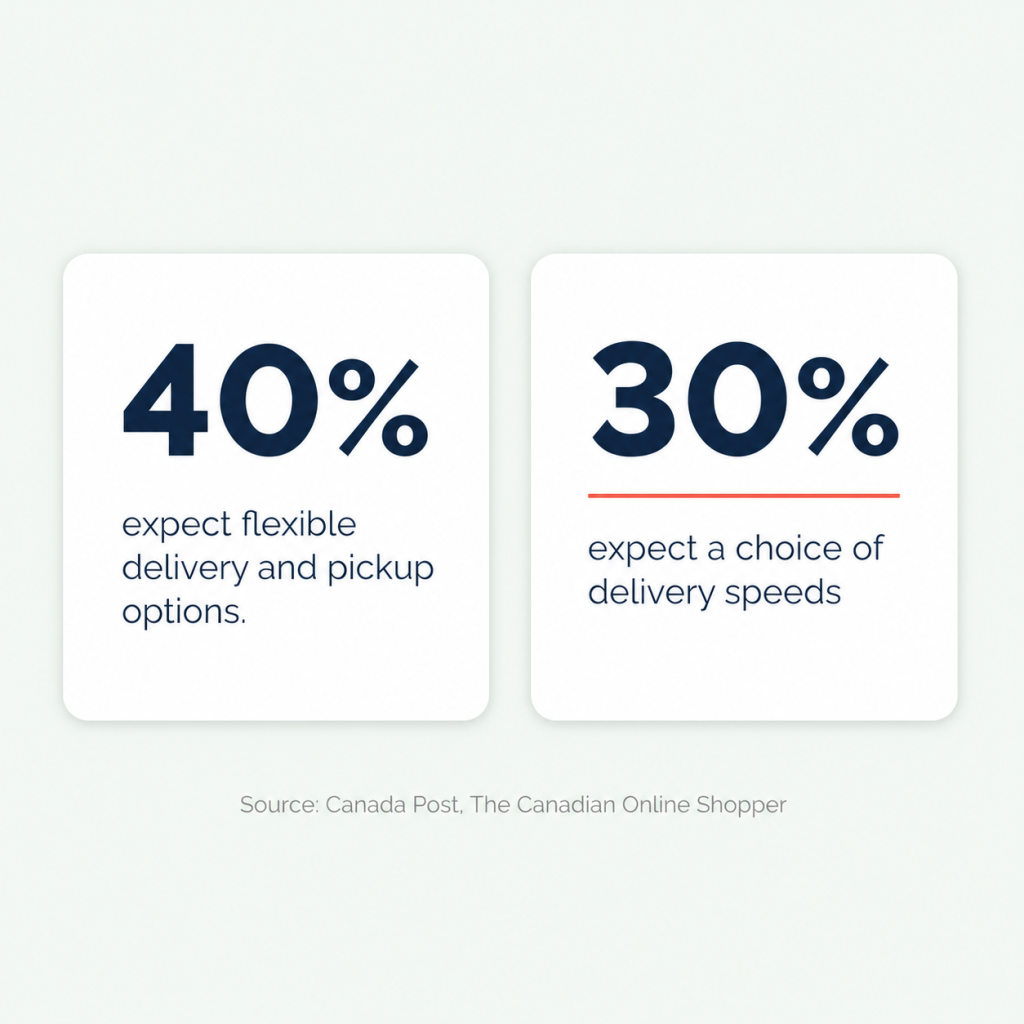
The cost structure matters more now because delivery expectations are rising, and meeting them isn’t free. Canada Post’s research on the Canadian online shopper found that 40% expect flexible delivery and pickup options, and 30% expect a choice of delivery speeds.
Offering multiple speeds and carriers at checkout affects conversion, not only cost. A single-carrier setup limits what you can put in front of a shopper. A multi-carrier structure lets you present options without eating the cost of the wrong carrier on every lane.
Frequently asked questions
What counts as an enterprise shipping rate in Canada?
Enterprise rates are the pricing carriers reserve for their highest-volume shippers, well below published or self-serve rates. Carriers don’t publish these tiers, and reaching them directly usually takes roughly $2million in annual spend with a single carrier.
How much volume do I need to negotiate directly with a carrier?
Meaningful leverage with a single carrier starts around $2 million in annual spend with that carrier specifically. Total spend split across several carriers doesn’t count, because each carrier only evaluates the volume you give it.
Will switching to a multi-carrier strategy hurt my existing carrier discount?
It can if you do it alone, because spreading volume thins out the trailing-volume tier you qualify for with each carrier. Inside a managed carrier network, the enterprise rates come from the network’s combined volume rather than your individual shipping, so adding carriers improves lane coverage without shrinking your tier.
Do I keep my carrier accounts if I leave the network?
The accounts are in your business’s name while you’re in the network, but the enterprise rates and the accounts are tied to the network’s agreement and combined volume. They don’t transfer, because the volume that earned them doesn’t transfer either.
See what your current setup is actually costing you
The gap between what you pay and what you should pay is almost always bigger than it looks, and it’s hiding on invoices you already have. Send us one recent shipping invoice and we’ll give you a written, lane-by-lane analysis of where your money is going and what a different structure would change. No call required.
Every invoice you don’t audit is money quietly leaving your business. Send us your invoices and we’ll show you the gap.