
Most Canadian e-commerce businesses don’t own their shipping rates. They ship through someone else’s account, see someone else’s markup, and have no way to verify whether the rate on their invoice matches what the carrier actually charged. Every shipment that goes out under those conditions is money leaving the business, and most merchants never see it happen.
This isn’t about finding a cheaper carrier. It’s about a structural problem: the moment you don’t own the carrier account, you’ve outsourced pricing power. And once that’s gone, everything downstream (your margins, your leverage, your ability to switch providers) gets worse.
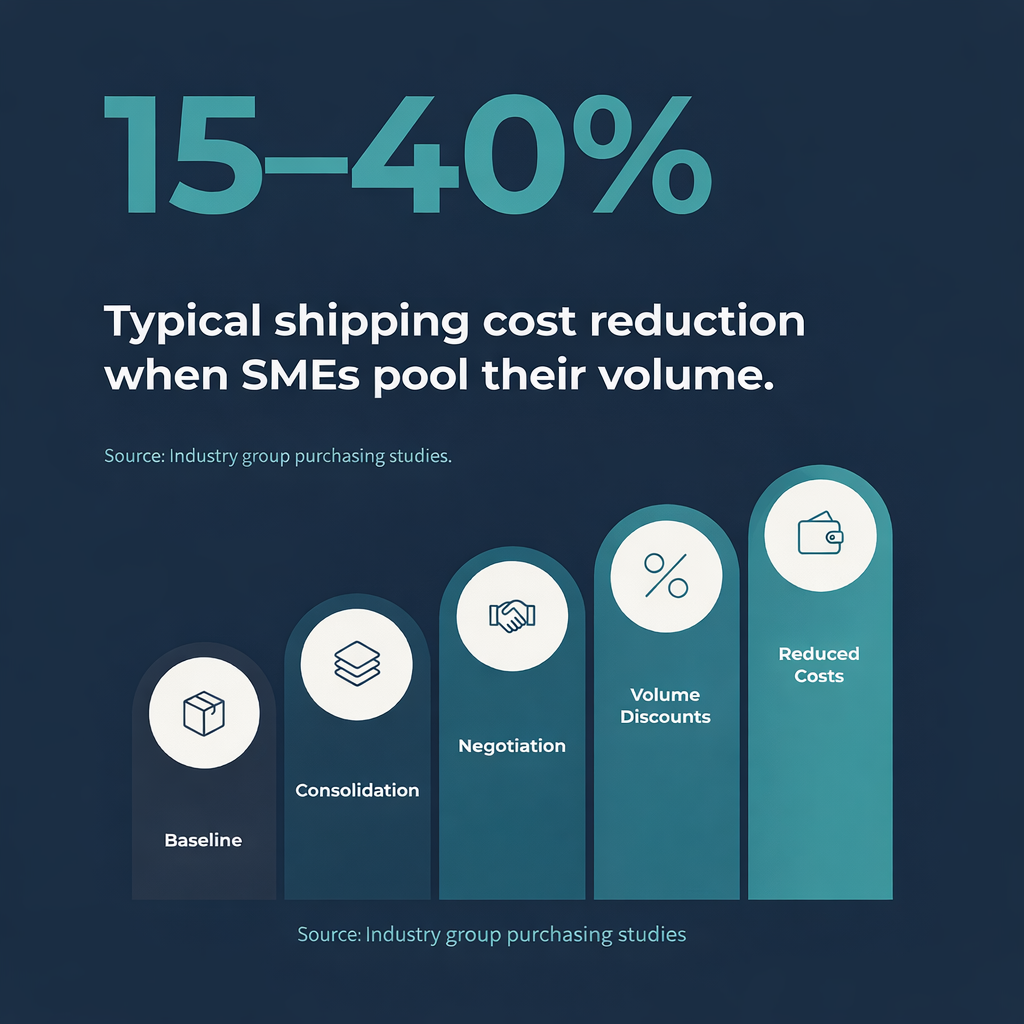
This guide explains why account ownership is the single most important decision in your shipping setup, how most platforms and intermediaries are designed to prevent it, and what a managed service model with direct carrier accounts actually looks like in practice. At Part n Parcel, we’ve helped 240+ Canadian e-commerce businesses make this shift, with typical results ranging from 15-40% in shipping cost reductions.
Why Account Ownership Is the Real Question
Before comparing rates, platforms, or providers, ask one question: whose carrier account are you shipping through?
The answer determines everything about your shipping economics. Here’s what changes depending on who holds the account:
| Factor | Your Own Carrier Account | Someone Else’s Account |
| Rate visibility | You see actual carrier rates | Rates include hidden margins |
| Pricing changes | Require your agreement | Can change without notice |
| Invoice auditing | You can verify against contracts | Limited visibility into actual costs |
| Support access | Direct access to carrier support | Support filtered through intermediary |
Most merchants never think about this. They compare headline rates, pick the cheapest-looking option, and move on. But the rate you see and the rate the carrier actually charges are two different numbers when you’re shipping through an intermediary’s account. The gap between them is invisible, and that’s by design.
Direct carrier accounts flip this entirely. You see the real rate. You can audit your invoices against your contract. If you want to leave your current provider, the carrier relationship stays with you. That’s what pricing control looks like.
The Hidden Economics of Shipping Platforms
Many 3PLs, shipping aggregators, and fulfillment platforms follow the same economic model:
The platform offers competitive-looking rates or “free” fulfillment services. Shipping appears affordable at first glance. But significant margin sits inside the spread between what the carrier charges and what you pay. You believe you’re saving money. The margin is simply buried where you can’t see it.
Aggregators are structurally prevented from competing on transparency. If they showed merchants the actual carrier rate alongside the marked-up rate, they’d expose every margin they’ve ever charged. That’s not an insult. It’s an observation about incentive structures. A business model built on opaque spreads can’t pivot to transparent pricing without undermining its own economics.
If shipping isn’t yet a meaningful cost line, simplicity makes sense. The ceiling appears the moment it becomes one. The risk isn’t using a platform. The risk is opaque shipping economics. If you can’t see the actual carrier rate you’re being charged, you can’t know whether you’re overpaying. If you can’t audit invoices against contracted rates, you can’t catch errors. If you don’t own the carrier account, you have no leverage when problems arise.
How the Managed Service Model Works
There’s a gap in the market that most merchants don’t know exists. On one side: doing everything yourself, negotiating directly with carriers using whatever leverage your individual volume provides (usually very little). On the other: handing everything to an aggregator and accepting opaque economics in exchange for simplicity.
The managed service model sits between these two options. Here’s what it actually involves.
Direct Accounts at Enterprise Rates
Instead of shipping through an intermediary’s account, each merchant gets their own direct accounts with carriers like FedEx, UPS, Canpar, Purolator, and regional carriers including Ecom Logistics and FleetOptics. Enterprise-level rates are accessed through collective volume across the network and long-term carrier relationships that took over a decade to build.
Direct accounts mean transparent pricing without platform markups, access to enterprise-level customer service, carrier representatives who work collaboratively with the network to serve mutual clients, and rate stability through multi-year commercial agreements.
Expertise and Enforcement
Scale alone doesn’t explain the savings. Knowledge asymmetry does.
Carriers operate tiered sales organizations – web accounts, field accounts, enterprise accounts – each with different rep ratios, different service levels, and different pricing authority. Most SMB merchants fall into the web tier by default: self-serve tools, basic discounts, and no named rep. Getting enterprise rates isn’t just a volume negotiation. It requires relationships with the right people on the carrier side, people who can structure the right partnership across service, support, and pricing. That’s a decade of relationship-building that no merchant can replicate by calling a carrier’s 1-800 number.
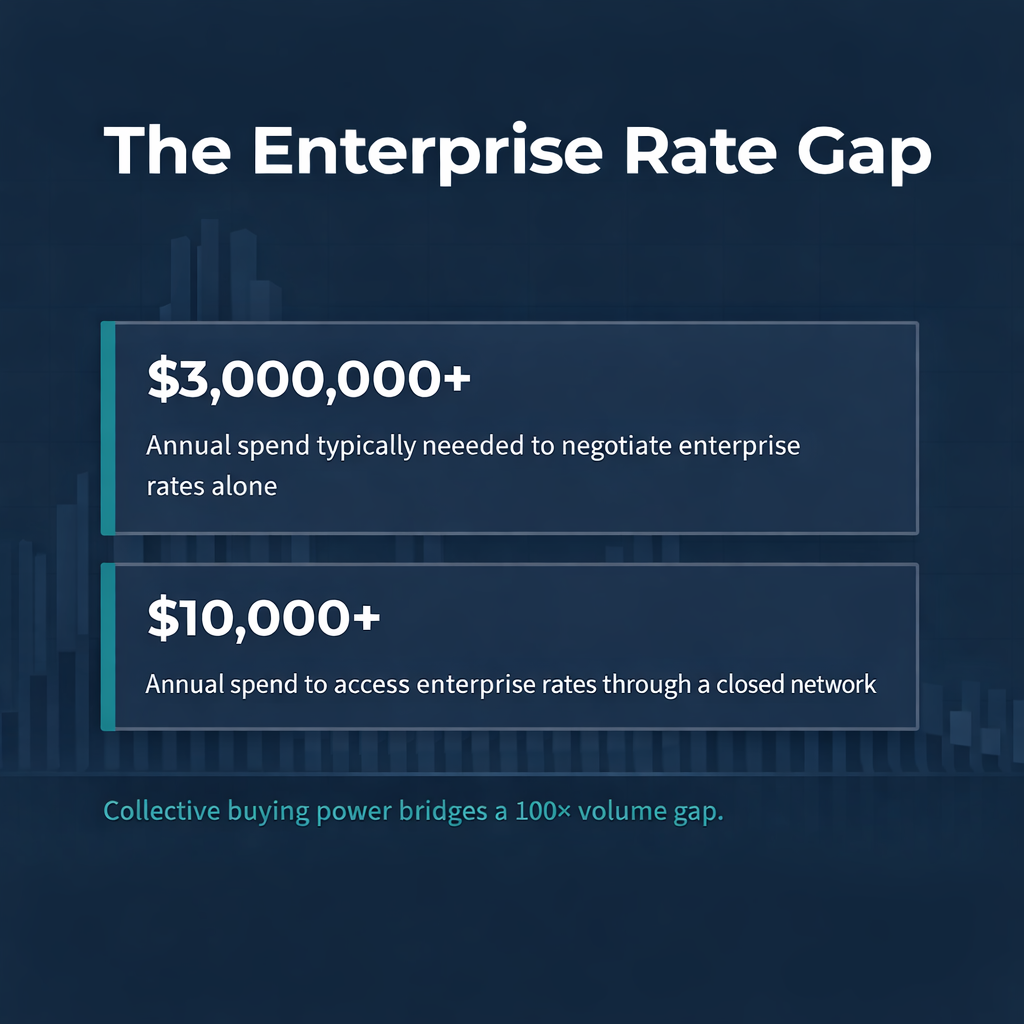
This distinction matters more than most merchants realize. A business spending $3M on shipping sounds like it should have carrier leverage. Split that across three carriers and you’re at $1M each, which still lands you in the self-serve tier with no named rep and no custom rate card. The gap Part n Parcel fills isn’t just “more volume.” It’s access to the right people at the carrier, built over years, that individual merchants can’t reach regardless of their spend.
Carriers operate complex pricing structures where the more informed party has a natural advantage. This isn’t adversarial. It’s simply how pricing works when one side has far more experience than the other. Costs creep up through hidden or poorly explained accessorial fees, discounts that look competitive but sit far below what’s actually available, General Rate Increases applied annually with little pushback, weak enforcement of negotiated terms, and poor service recovery without leverage or named carrier contacts.
Major carriers have raised base rates by an average of 5.9% annually for three consecutive years. And the headline number understates the real impact: surcharges, mid-year adjustments, and peak-season fees often push actual cost increases well above 8-12%. Without someone actively monitoring and challenging these increases, they compound silently year over year.
An effective managed service counters this by actively monitoring invoices for errors and unauthorized charges, challenging fee creep when carriers attempt to add new charges, negotiating multi-year commercial agreements that protect against annual rate increases, and providing direct carrier contacts for faster resolution.
This is what separates a managed service from simply “pooling volume.” Anyone can aggregate shipments. Few can enforce the terms properly.
Monitoring Delivery Performance: Not Just Costs
When merchants hand their shipping to a 3PL or fulfillment service, those operations optimize for their own efficiency, not the merchant’s customer experience. They don’t monitor delivery times by corridor. They don’t flag when a carrier is underperforming on a specific lane. They don’t proactively adjust routing when service degrades.
Part n Parcel’s Monitor function does exactly this. Delivery performance is tracked corridor by corridor. When a carrier underperforms on a specific route, routing gets adjusted before customers feel it. That’s a fundamentally different model than outsourcing logistics and hoping the carrier shows up.
Automated Optimization
Platform tools (like ShipStation integration) automate carrier selection across all network carriers, routing each shipment based on destination, weight, dimensions, and service requirements. This eliminates the time-consuming process of manually checking rates for every order, while custom routing rules and bulk label printing streamline the entire fulfillment workflow.
What Canadian Businesses Can Expect
Results vary based on current shipping setup, volume, and product characteristics. But certain patterns emerge consistently.
Typical Savings
Businesses shipping through basic e-commerce platforms or single-carrier relationships typically see the highest improvements. The 15-40% range reflects typical outcomes. For some merchants, the right combination of volume, carrier mix, and route optimization pushes savings significantly further.
From working with e-commerce businesses across Canada:
- A Vancouver luxury fashion brand reduced costs by 57% after migrating from a single UPS account to a multi-carrier strategy with Canpar, Purolator, and FedEx through ShipStation.
- An Ottawa apparel business cut shipping spend by 42.5% in their first quarter after moving off an aggregator platform to direct carrier accounts.
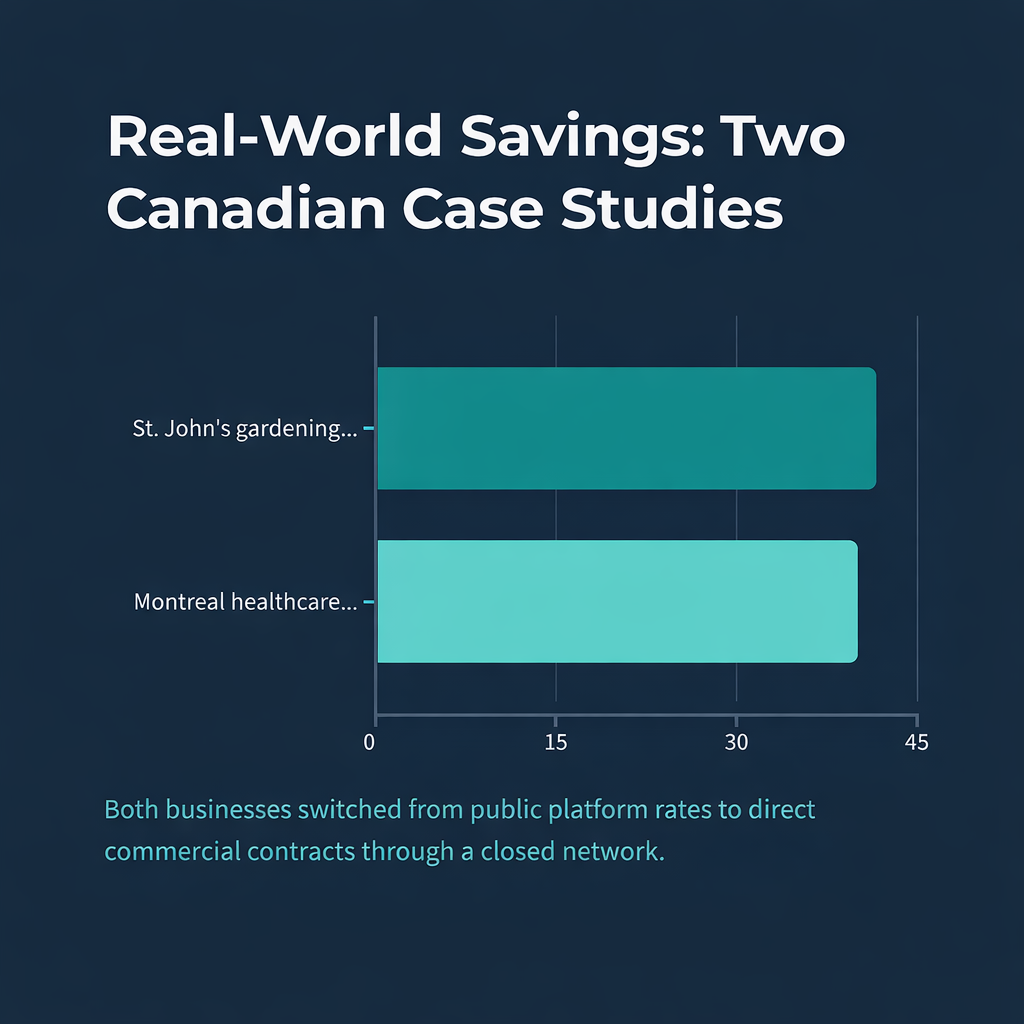
- A Montreal healthcare company reduced costs by 40% after optimizing their carrier mix.
- A St. John’s gardening business achieved 41.6% savings by switching from public platform rates to direct commercial contracts.
Companies already using sophisticated multi-carrier strategies see more modest improvements, typically in the 10-20% range.
Operational Improvements
The financial impact is usually the headline number, but operational improvements matter equally. Automated carrier selection eliminates hours of weekly rate shopping. Enterprise-level customer service reduces time spent resolving shipping issues. Platform automation (bulk label printing, custom routing rules) streamlines fulfillment. Multi-carrier access provides backup options during service disruptions or peak seasons.
How to Evaluate a Shipping Partner
Every question below traces back to the same thing: can you see what you’re actually paying, and do you control the relationship?
Account Ownership
If a provider won’t give you your own carrier account, ask yourself why. The most common reason is that your shipping volume is more valuable inside their account than inside yours. That’s not a partnership. That’s a margin structure. Any provider confident in the value of their service will let you hold the carrier relationship directly.
Revenue Model
If you can’t get a clear answer to “how do you make money on my shipping,” the margin is sitting inside your rates. That’s the opacity problem in miniature. Performance-aligned pricing (where the provider earns only when you save money) means their incentive is to lower your costs, not hide them.
Rate Protection
Carriers raise base rates by 5.9% every year, and the real cost impact lands closer to 8-12% once surcharges compound. If your provider isn’t securing multi-year commercial agreements that protect against those increases, nobody is fighting that erosion on your behalf. It compounds silently, and five years from now you’re paying roughly 30% more with nothing to show for it.
Carrier Coverage
For Canadian businesses, coverage across major national carriers (FedEx, UPS, Purolator, Canpar) plus regional and local carriers for specific routes isn’t optional. A provider built for US merchants with Canadian capabilities bolted on will feel different on day one. If they can’t name which carriers they’d recommend for your specific corridors, they’re guessing.
Is This Right for Your Business?
The model works best for businesses meeting certain criteria.
Good fit:
- Ship $10,000+ annually (approximately 1,000 shipments)
- Currently use public platform rates, aggregator rates, or individual carrier accounts
- Willing to commit volume in exchange for better rates
- Value automation and want to spend less time on shipping logistics
- Want to own the carrier relationship, not rent it
Less ideal fit:
- Ship fewer than 80 packages monthly
- Want complete flexibility to switch carriers on every shipment
- Already have enterprise-level rates through high individual volume
The volume threshold to negotiate enterprise rates independently is around $1M in annual spend with a single carrier. A business spending $3M on shipping sounds like it should have leverage, but split across three carriers, that’s $1M each, which still lands you in the self-serve tier. No named rep. No custom rate card. No real negotiating power. That’s the gap a managed service fills for growing merchants. shipping policy builder
What Your Current Setup Is Costing You
Most businesses have never had an expert review their carrier invoices, rate structures, or contract terms. Errors go unnoticed. Margin creep goes unchallenged. Optimization opportunities stay hidden.
Every invoice you don’t audit is money leaving your business.
Run your numbers through the Shipping Savings Estimator and see what the gap looks like.